
Contact Us
Get In Touch
- 703-283-8547
- contact@musicforlife.org
- Monday-Friday | 2:30PM-7:00PM
Frequently Asked Questions (FAQs)
In what ways can I donate to Music for Life?
Network for Good is our primary donation platform, and we also support donations through PayPal and Crypto.
Should I make a monthly or one-time donation? What is the difference?
We recommend donating a small amount monthly as an easy way to increase your impact. This provides us with steady, reliable support so that we may reach more at-promise youth throughout the year. One-time donations are also greatly appreciated and help support immediate program needs and opportunities.
Is my donation tax-deductible?
Yes! All donations are tax-deductible to the extent allowed by law.
How are my donations used?
93% of your donation goes toward our programs. It covers our expenses for instructors, equipment, and teaching supplies. 7% goes toward overhead. It covers accounting, fundraising, office supplies, and annual government registration fees to operate in Virginia, DC, Maryland.
Where does Music for Life operate / what is your service area?
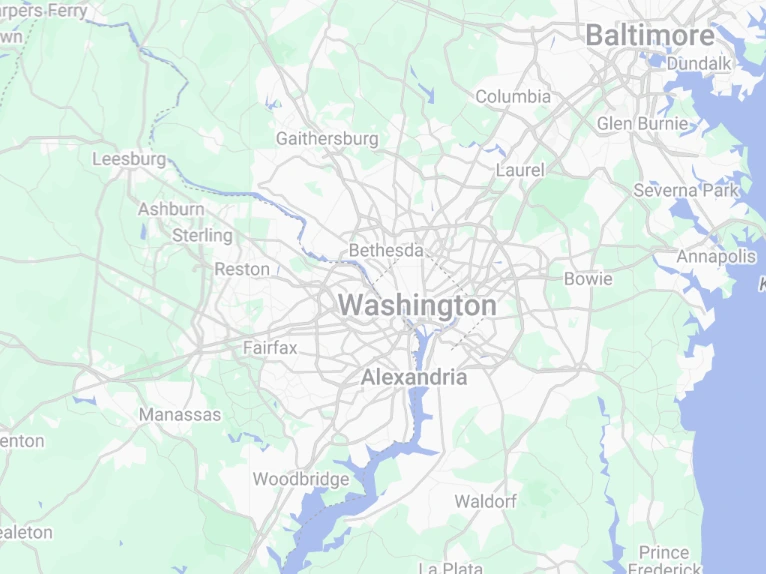
Music for Life only operates in the metropolitan Washington DC area:
- Northern Virginia (Alexandria, Arlington County, Falls Church, Fairfax County, Loudon County, Manassas, Prince William County),
- DC (District of Columbia Public Schools),
- and the two neighboring counties in Maryland (Montgomery County and Prince George’s County).
Am I eligible to be a student with Music for Life?
Before submitting an application, please email us at info@musicforlife.org to see if your child is eligible.
We only offer our 5 music programs to at-promise K-12 students in our service area (the metropolitan DC area):
- Students eligible for our After-School Guitar, STEAM Guitar, and Band & Orchestra Programs must: 1) attend middle or high school, and 2) qualify for Free or Reduced Lunch.
- Students eligible for our Ukulele and Piano Programs must attend a Title I Elementary School.
Do you offer paid lessons?
No, we do not offer paid lessons. We are a non-profit that provides free music education programming only to at-promise youth.
What is Music for Life's mission?
Music for Life’s mission is to narrow the achievement gap between at-promise youth and their peers in more advantage families; to remove those barriers that deter them from attaining the competencies and experiences necessary to become self-sufficient adults.
What are the barriers at-promise youth face?
Income inequality1 and a lack of relationships with peers and adults outside their socioeconomic environment who have the competences and experiences2 they are expected to attain.
1. Research finds that families are geographically self-segregating by wealth, education, ethnicity, and race therein creating communities that are disproportionately impacted by income inequality. The schools that serve these communities have a disproportionally large number of at-promise youth enrolled; typically 50% or more. Government school budgets are not sufficient to provide all students with equal access and opportunity to succeed at school.
Individual schools augment their government budget with funds from course fees and parent organizations like PTAs/PTOs, booster groups for band, orchestra, chorus, and sports teams as well as local businesses. Schools with high percentages of at-promise receive significantly less revenue from these alternative sources. At-promise students do not have to pay course fees, low-income families cannot provide much financial support, and their communities have fewer businesses that can support their schools.
The result is these schools are under-resourced compared to schools with much lower percentages of at-promise youth. Fewer resources are available to support student needs; teacher supplies are limited resulting in less rigorous course content. The result, SAT scores and on-time graduation rates decline.
2. The education, competencies, and experiences of parents and the other adults in their neighborhood significantly impacts whether a child succeeds in school. This is particularly true for first-and -second-generation immigrants who often have limited experience with our language, customs, and institutions.
Schools cannot provide every child with all the competencies and experiences they need to attain to succeed; some must be provided outside of school. When adults in their family and neighborhood lack those competences and experiences, they cannot pass them on to their children. Their children must attain them on their own. Without adequate structure and guidance, most are unable to do that and end up being less successful in school.
How does Music for Life make an impact?
We remove at-promise youth’s income inequality barrier by providing them with the financial support necessary for them to fully participate in their school’s music education programs; covering all course fees, equipment, and private lessons. We remove their lack of relationships barrier by providing them with mentoring to help them attain or understand those competencies and experiences not otherwise available to them.
How can I access Corporate Documents?
Corporate documents to include current financial statements, audit reports, and policy manuals may be obtained by emailing info@musicforlife.org or texting 703-283-8547.